

Onchain Asset Management
Tokenized Treasuries Yield vs DeFi: Beating Stablecoin Lending 98% of Days
98% of days in Q1 2026, tokenised treasuries paid more than DeFi stablecoin lending. The data is definitive.
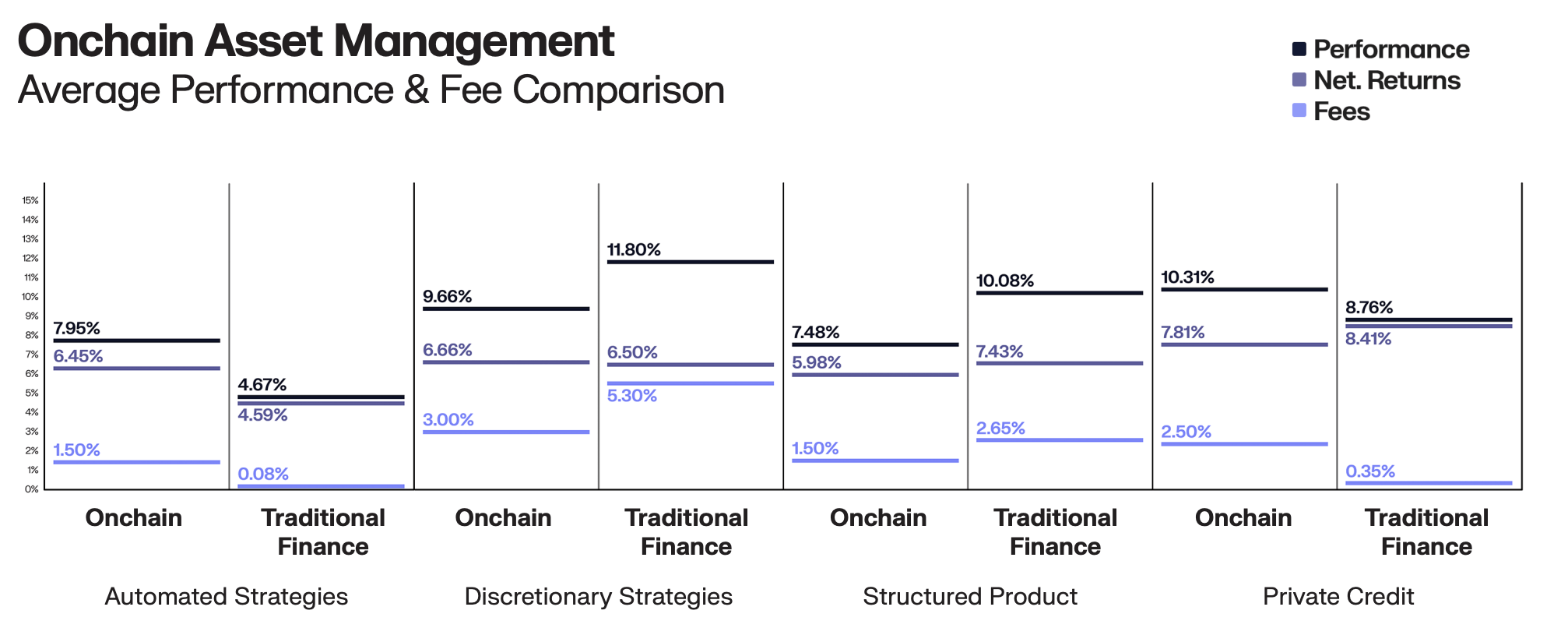
The yield comparison that rewrites allocation logic
For years, DeFi lending was the default onchain yield strategy. Deposit stablecoins into a lending protocol, earn variable interest, accept the volatility. It worked when rates were high. It became painful when they compressed.
Tokenised treasuries changed the equation. Since mid-2024, they have paid more than the DeFi benchmark stablecoin lending rate on 64% of all days. That alone should make allocators reconsider their positioning.
But the Q1 2026 data makes the case overwhelming.
Tokenised treasuries outperformed on 98% of days. Not a slim margin. A decisive, consistent edge backed by sovereign credit rather than protocol incentives.
Volatility is the hidden variable
Yield matters. Yield stability matters more. An allocator managing $50 million in onchain capital cannot accept wild swings in their projected returns. DeFi lending rates are inherently volatile. They shift with protocol utilisation, token emissions schedules, and broader market sentiment.
Tokenised treasuries delivered 3.6x lower monthly yield volatility than the DeFi benchmark in Q1 2026. That is not a marginal improvement. It is a structural advantage rooted in the underlying instrument.
US government debt pays predictable coupons. The yield curve moves, but it moves slowly and transparently. When you wrap that instrument in a token, you bring sovereign-grade predictability to an onchain format.
Why DeFi rates compressed
DeFi stablecoin lending rates follow supply and demand for leverage. When the market is bullish, borrowing demand rises and rates climb. When sentiment cools, rates collapse. This cycle repeated throughout 2024 and 2025.
The structural issue runs deeper. As more capital enters lending protocols, rates naturally compress. The same dynamic that drives TVL growth erodes the yield that attracted capital in the first place. More depositors. Same demand for borrowing. Lower rates.
Tokenised treasuries face no such dynamic. Their yield derives from an external source with independent pricing. The more capital that flows into onchain treasuries, the more the asset class validates itself without diluting returns.
The readiness advantage of treasuries
Our RWA readiness framework scores treasuries at 27 out of 30. The highest of any asset class we evaluated. This score reflects six factors: standardisation, underlying liquidity, valuation frequency, redemption speed, regulatory clarity, and onchain demand pull.
Treasuries score highly across every dimension. They are standardised instruments with deep underlying markets. They are valued in real time. Redemption mechanics are well-established. And the onchain demand pull is enormous, driven by the stablecoin ecosystem that needs yield-bearing alternatives to idle USDC and USDT.
This readiness advantage explains why treasuries have scaled faster than any other tokenised asset class. The infrastructure was simpler to build. The market was ready.
Who is allocating and why
The wallet distribution reveals a specific pattern. In four of five asset classes, over 89% of value concentrates in the top 5% of wallets. Treasuries are no exception. Institutional allocators dominate.
But the reasoning differs from other asset classes. Institutions are not buying tokenised treasuries for speculative upside. They are buying them for operational efficiency. Onchain treasuries settle faster, compose with DeFi protocols, and operate around the clock.
Treasury management teams at crypto-native firms use them as a core component of onchain asset management. They park idle capital in instruments that earn sovereign yield while remaining instantly deployable.
This is not yield farming. This is treasury management, evolved.
The implications for portfolio construction
When your risk-free onchain rate is backed by US Treasuries rather than protocol emissions, portfolio construction changes fundamentally. You can build more reliable yield curves. You can model cash flows with higher confidence. You can allocate risk capital knowing your base layer is stable.
The 3.6x volatility reduction translates directly into tighter risk budgets. An allocator who previously reserved 200 basis points of buffer for yield variability now needs far less. That freed capital goes to work elsewhere.
As the tokenised assets market scales from $27 billion toward $400 billion, treasuries will anchor the base layer. Everything else builds on top of a yield floor that actually holds.
What comes next
The yield advantage of tokenised treasuries is durable but not permanent. As DeFi matures and new lending mechanisms emerge, the gap may narrow. But the volatility advantage is structural. It reflects the nature of the underlying asset, not a temporary market condition.
We expect tokenised treasuries to become the default onchain cash instrument by 2028. Not because anyone mandates it. Because the data makes the case impossible to ignore.
98% of days. 3.6x lower volatility. The numbers speak for themselves.
Frequently asked questions
Do tokenised treasuries yield more than DeFi stablecoin lending?
Yes. Since mid-2024, tokenised treasuries paid more than the DeFi benchmark stablecoin lending rate on 64% of all days. In Q1 2026, that figure rose to 98% of days, with 3.6x lower monthly yield volatility.
Why are tokenised treasuries more stable than DeFi lending rates?
Tokenised treasuries derive yield from US government debt instruments, which carry sovereign credit risk and predictable coupon payments. DeFi lending rates fluctuate with supply and demand dynamics in liquidity pools, creating significantly higher volatility.
What is the readiness score for tokenised treasuries?
Tokenised treasuries score 27 out of 30 on Keyrock’s RWA readiness framework. The highest of any asset class. They benefit from high standardisation, frequent valuation, rapid redemption mechanics, and strong onchain demand pull.
How does tokenised treasury yield volatility compare to DeFi?
In Q1 2026, tokenised treasuries exhibited 3.6 times lower monthly yield volatility than benchmark DeFi stablecoin lending rates. A far more predictable source of onchain yield.